
Understanding how payment processing works and the options restaurants use to manage these costs.
Credit cards have become a normal part of the dining experience. They make paying faster and more convenient for customers, and for many restaurants they now account for the majority of transactions.
When a customer pays with a card, the restaurant does not receive the full amount of the sale. A portion of the transaction is deducted as payment processing fees.
Individually, these fees may seem small, but across hundreds or thousands of transactions they can add up to a significant operational cost.
For restaurants already operating on tight margins, understanding how payment processing works can make a real difference.
What many restaurant owners don't realize is that payment processing can be structured in different ways depending on how the POS system is configured. Some setups allow businesses to absorb the cost themselves, while others allow part or all of the processing expense to be passed along through the way payments are handled at checkout.

Credit card processing costs
The Hidden Cost Behind Card Payments
When customers pay with a credit card, the restaurant does not receive the full amount of the sale. A portion of every transaction is deducted for payment processing fees.
Individually, these fees may seem minimal. Over the course of hundreds or thousands of transactions, however, they can add up to a significant expense for the business.
For many restaurants, payment processing becomes an operational expense that runs quietly in the background but continues to affect overall profitability.
The Good News: Restaurants Have Options
What many restaurant owners don’t realize is that there are several ways payment processing can be structured depending on the system and setup being used.
Some restaurants choose to build payment costs into their menu pricing. Others explore programs that allow them to recover part or even all of the processing expense through how payments are handled at checkout.
These options can vary depending on the POS system, payment processor, and the policies followed by the business.
Common Approaches Restaurants Explore
Restaurants today are increasingly looking at different payment strategies to manage processing costs. Some of the more common approaches include:
Cash Discount Programs
Some businesses offer a discount to customers who choose to pay with cash. In these cases, the listed price assumes a card payment, while cash customers receive a slightly lower price.
Dual Pricing
Dual pricing simply displays two prices for an item — one for cash payments and another for card payments. This allows customers to choose the payment method that works best for them.
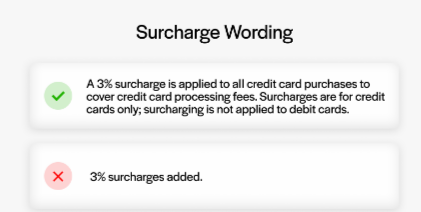
Strict guidelines for surcharging
Credit Card Surcharges
In some situations, businesses may apply a small fee when a customer pays with a credit card. These programs must follow strict and specific rules and disclosure requirements, which means they are used less frequently than some other payment strategies.
Transparency Is Important
Whenever businesses implement programs designed to offset payment costs, transparency is key.
Customers should clearly understand the pricing structure before completing a purchase, and businesses must follow the guidelines established by card networks and applicable regulations.
When implemented properly, these programs can help restaurants manage processing costs while maintaining clear communication with their customers.
Final Thought
Credit cards provide convenience and flexibility for customers, but the processing costs behind those transactions are an important part of the financial picture for restaurant owners.
The good news is that restaurants today have more options than ever when it comes to how payments are structured. Understanding those options can help businesses make informed decisions about how they manage payment processing while continuing to provide a smooth experience for their guests.

330,633.1221
Hospitality Control Systems has helped restaurants and bars implement reliable POS technology with on-site installation, hands-on training, and real 24/7 support since 1988.
Because payment processing and POS systems are closely connected, the way a system is configured can determine how those costs are structured. Proper setup of payment features, pricing models, and checkout configuration is often where businesses are able to manage or offset processing expenses.
If you're exploring POS options or want help understanding the different ways payments can be structured, our team is always happy to talk through the options and help you find the right fit for your operation.